

STYLEM TAKISADA-OSAKA CO., LTD. (Headquarters: Naniwa-ku, Osaka; President: Ryuta Taki; hereinafter, STYLEM) participated in the "Textile Exchange Conference 2025" (Note 1) held in Lisbon, Portugal, from October 13 (Mon) to 17 (Fri), 2025, and promoted its "ORGANIC FIELD" initiative, which supports Indian cotton farmers in transitioning to organic farming, aiming to reduce environmental impact and improve working conditions.
*1 "Textile Exchange Conference 2025": An annual conference hosted by Textile Exchange (an international non-profit organization that promotes climate and nature-positive action across the fashion, textile, and apparel industry), where apparel brands, supply chain partners, innovators, farmers, and academics gather to jointly discuss climate-related issues and solutions. https://textileexchange.org/conference-2025/
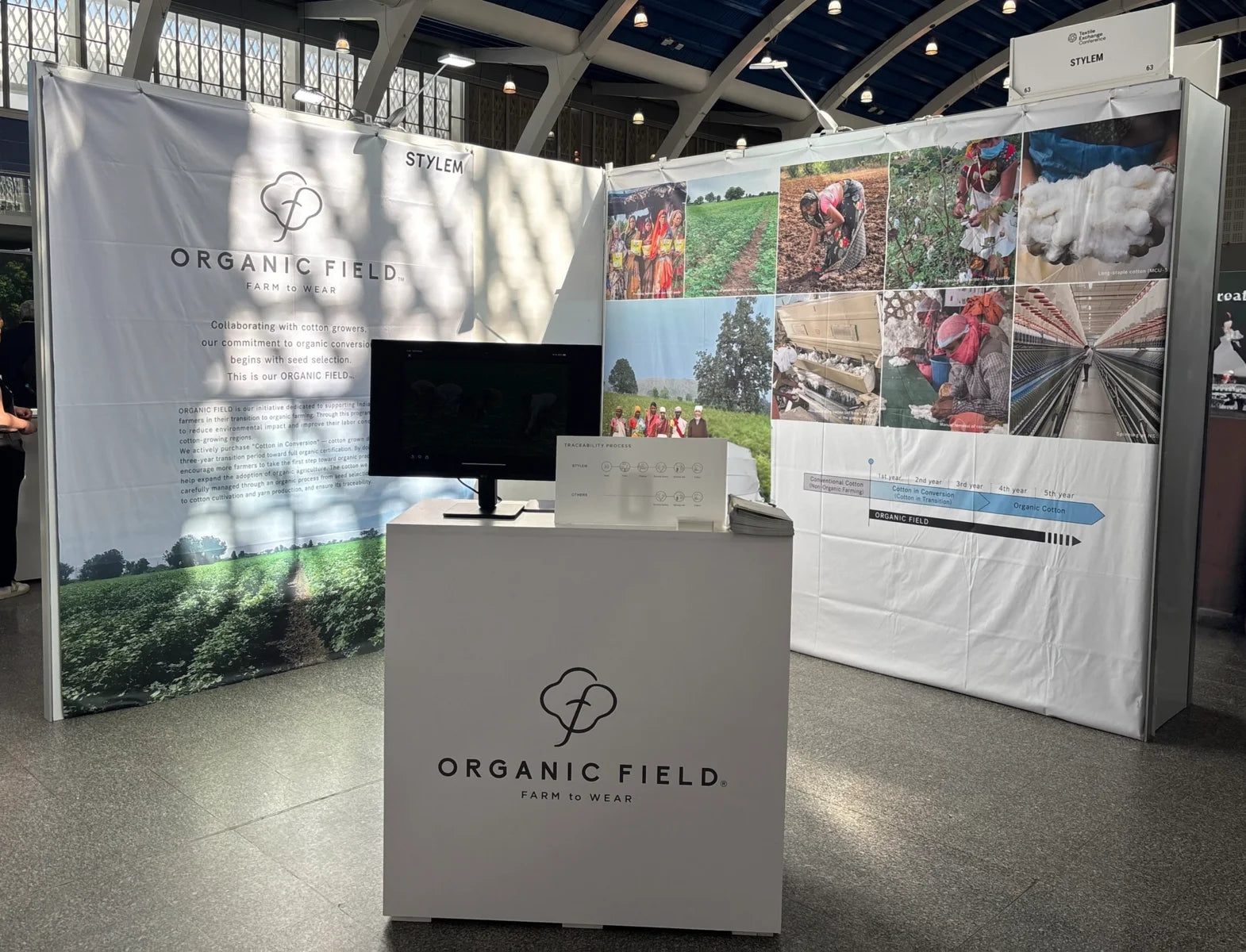
STYLEM has been a member of Textile Exchange since April 2025, and this time, through its "ORGANIC FIELD" booth exhibition, it highlighted the challenges hindering the spread of organic cotton and initiatives that could serve as solutions, as follows.
■ Supporting Farmers' Efforts by Purchasing "Cotton in Conversion"
Only 1.4% of the world's cotton production is organic cotton (※2). This is due to the existence of cotton in conversion, which is cotton grown during the three-year transition period when organic certification cannot be obtained. Even though it is grown using the same methods as organic cotton, cotton from this period is not easily recognized or valued in the market. Furthermore, the extensive labor and time required to convert a farm to organic agriculture place a significant financial burden on farmers, hindering its widespread adoption. ORGANIC FIELD not only provides guidance on organic farming methods but also supports farmers' efforts by purchasing cotton in conversion at a premium, continuing to support them even after they achieve organic certification.
*2 Source: Textile Exchange. Organic Cotton Market Report
2022.
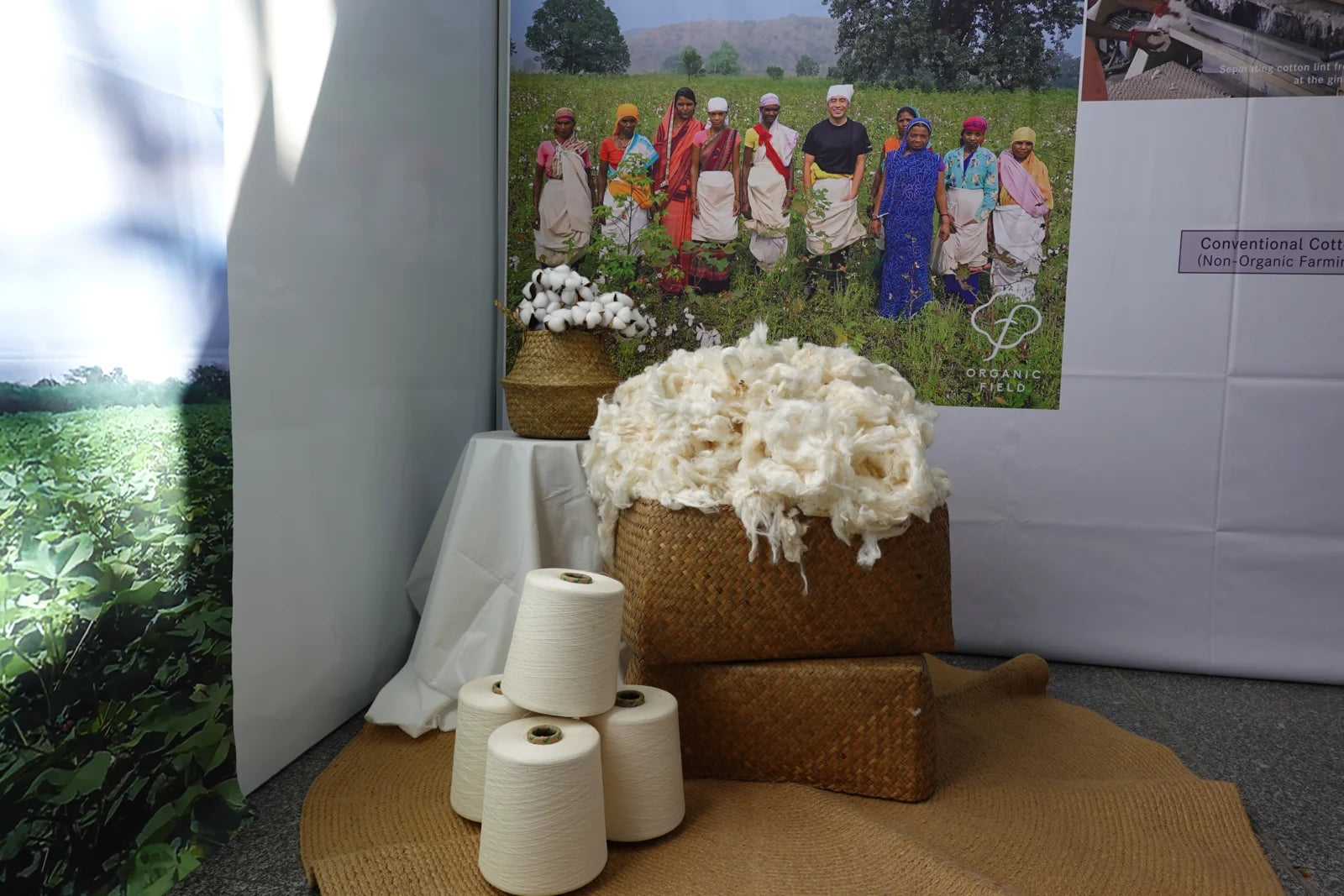
■ Transition to organic farming and ensuring traceability
Conventional farming methods that rely on chemical fertilizers and pesticides cause soil, water, and air pollution, which negatively impacts countless living organisms and disrupts the balance of ecosystems. Switching to organic farming reduces the environmental burden, protects the health of farmers, and leads to improvements in the working environment.
Furthermore, the harvested cotton ensures traceability by being thoroughly managed through organic processes from seed selection to cultivation and yarn production.
STYLEM will continue to promote sustainable manufacturing that considers the environment and society by expanding the ORGANIC FIELD initiative, utilizing the knowledge and challenges gained from this conference in future actions.