■ Background on the adoption of "asanoha"
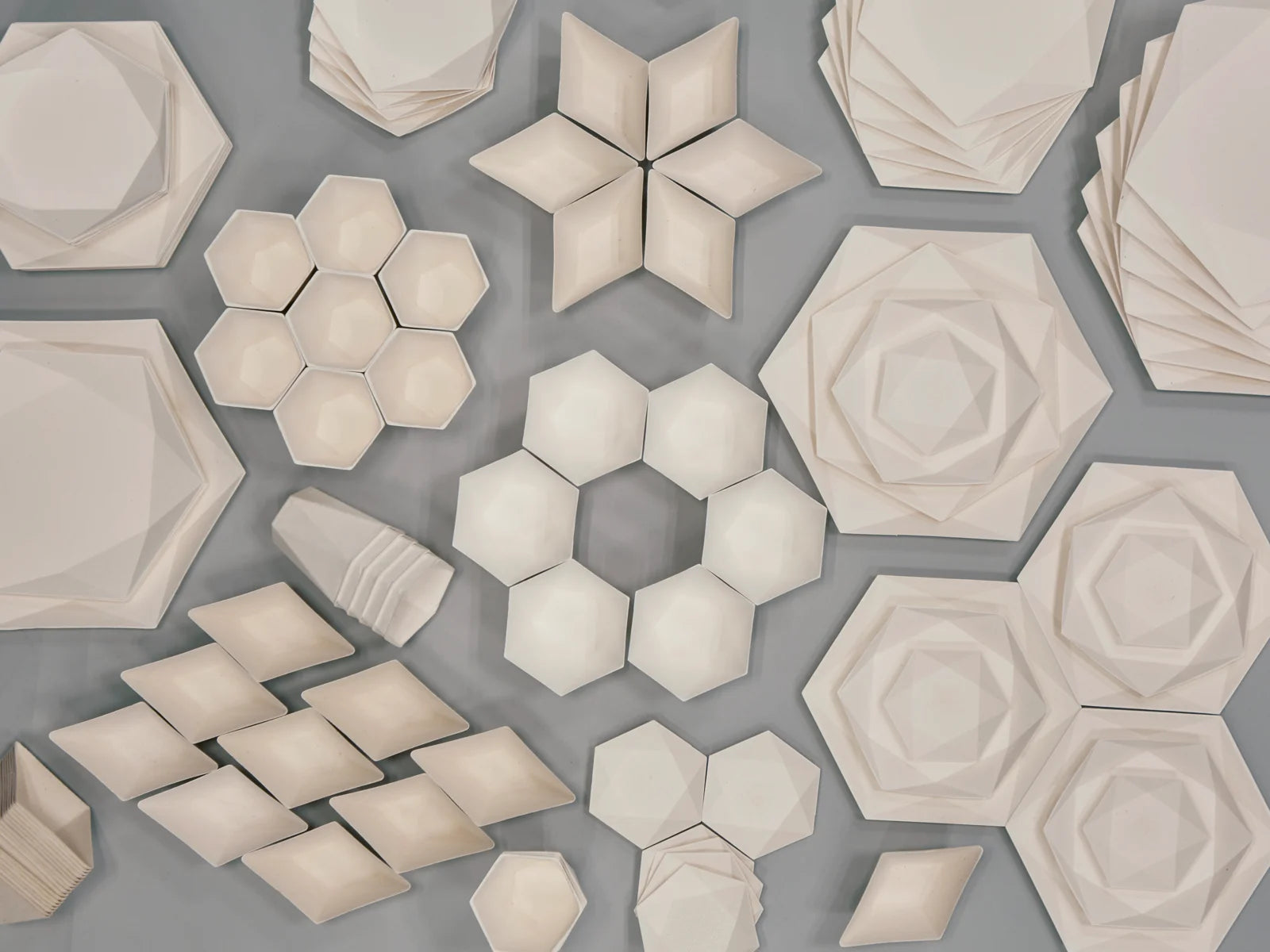
The adoption of "asanoha" for this event came about when Masayoshi Ishida, Dean of the College of Gastronomy Management at Ritsumeikan University and former staff member of Slow Food International's Italian headquarters, encountered it at a study session held in Kyoto. He deeply resonated with the product's use of hemp stalks (ogara) as a byproduct in some of its raw materials, its distinctly Japanese asanoha pattern, and its recyclability as a resource rather than waste after use. Recognizing these qualities, he found it to be a suitable choice for this event, leading to its adoption.
■"Asanoha" — a vessel to elevate Japanese cuisine, from Japan to Italy.
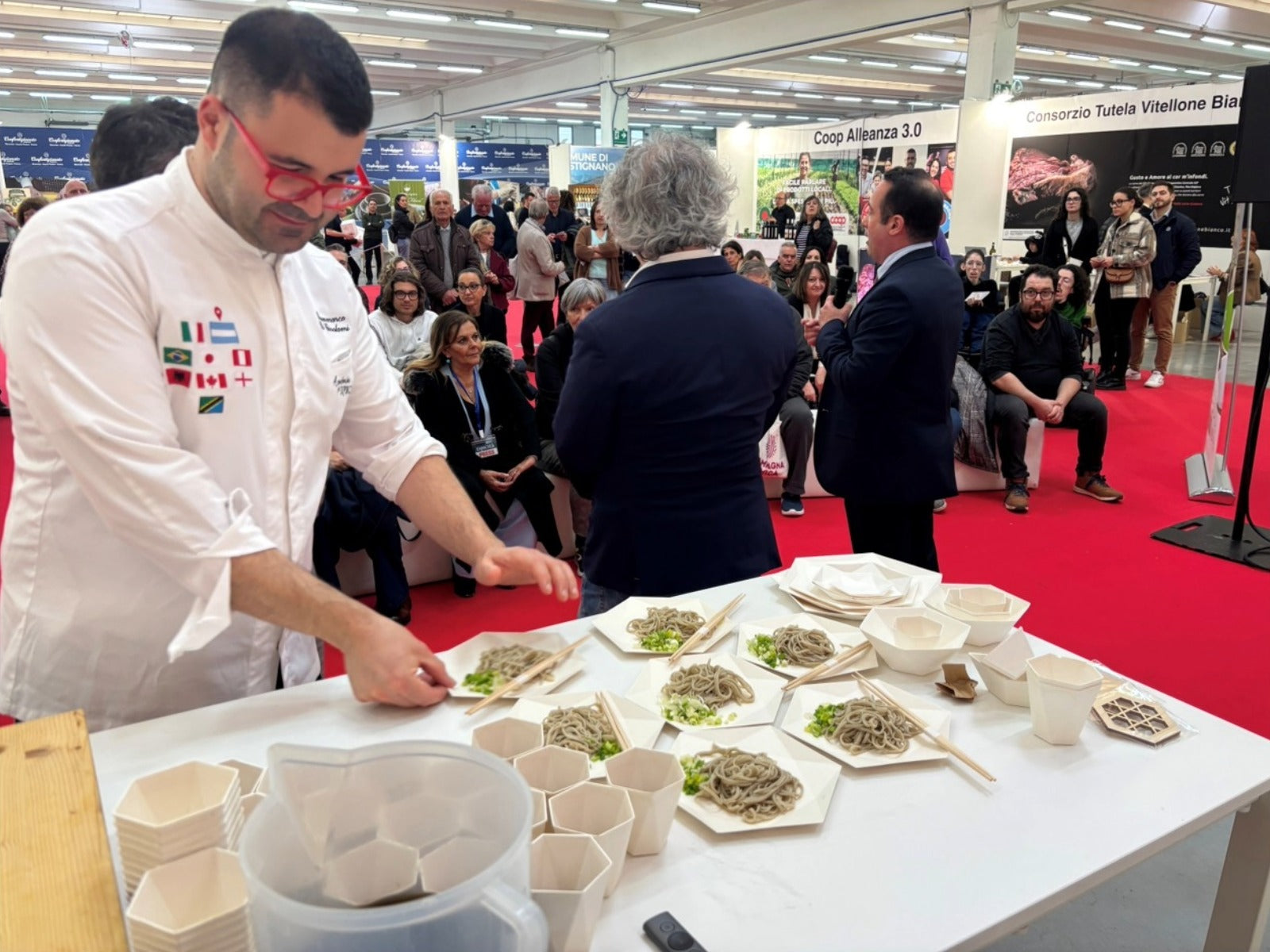
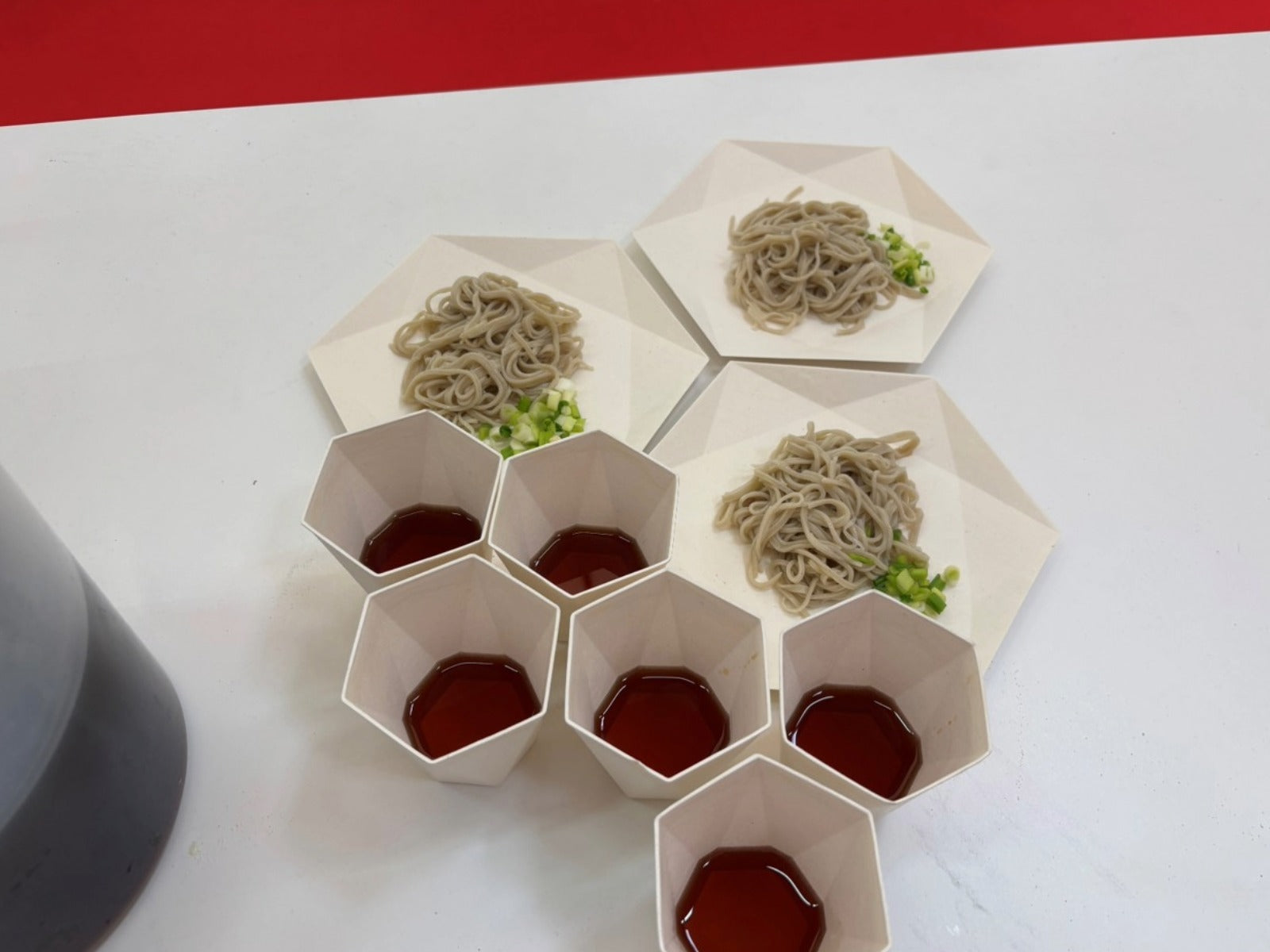
This event featured a session titled "SOBA: L’ARTE GIAPPONESE DEL GUSTO CHE CONQUISTA IL MONDO (Soba: The Art of Japanese Taste That Conquers the World)." The session aimed to introduce the ancient preparation methods and craftsmanship of soba, a signature dish symbolizing Japanese history and culture. To express these aspects, "asanoha" tableware was used. During the soba-making demonstration, Dean Ishida introduced "asanoha" using leaflets and panels.
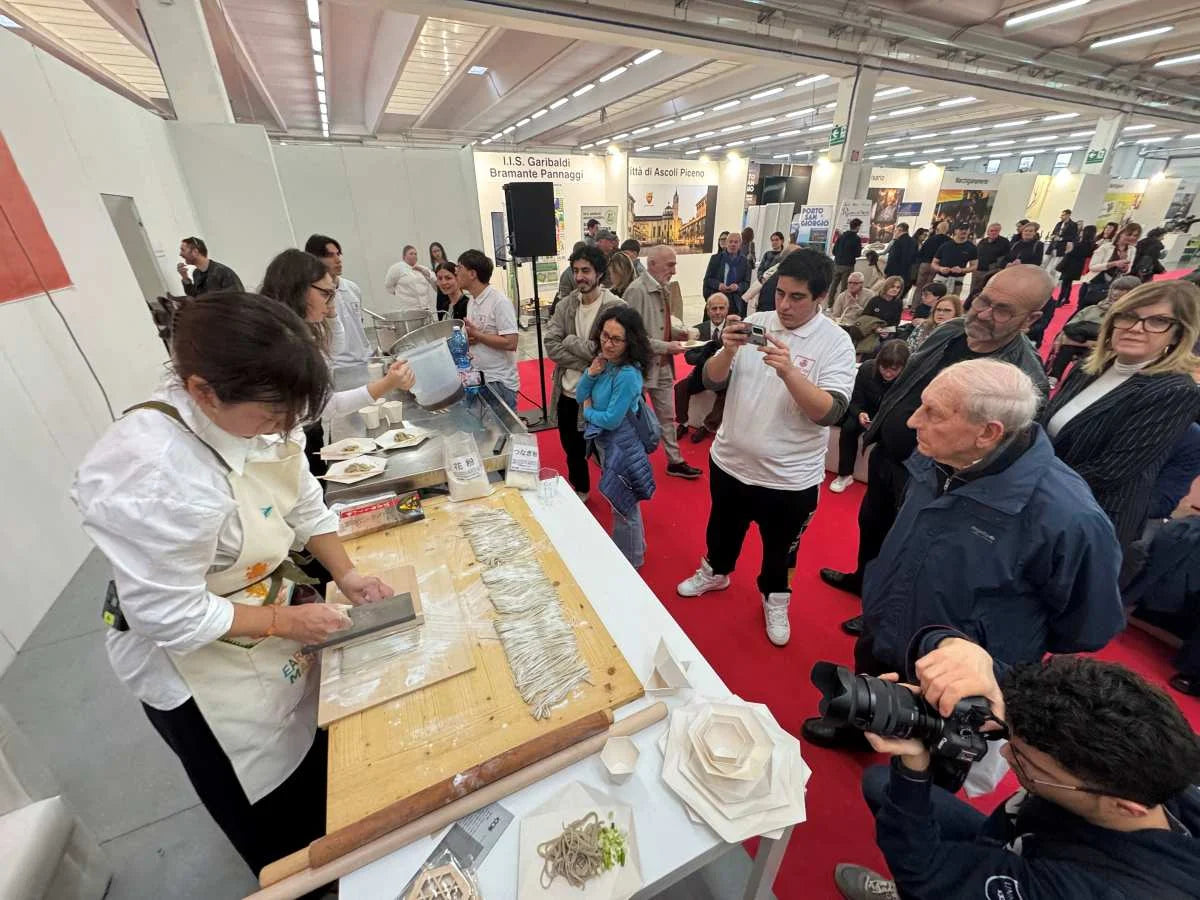
Attendees, including local food experts, marveled at the beauty of the tableware. After the demonstration, many expressed their desire to "cherish and take it home instead of discarding it," indicating the profound appeal of the products. Even in Italy, a country with a rich history of paper production, people were surprised, with some exclaiming, "I've never seen such a product before."
■About "asanoha"
asanoha are paper dishes that evoke Japan, born from a desire to share Japanese culture and tradition.
A portion of the raw materials used is "ogara" (hemp stalks), a byproduct left over after harvesting hemp fibers. We are also advancing initiatives such as collecting used asanoha and recycling it as raw material for toilet paper, as part of our environmentally friendly efforts to circulate renewable resources.