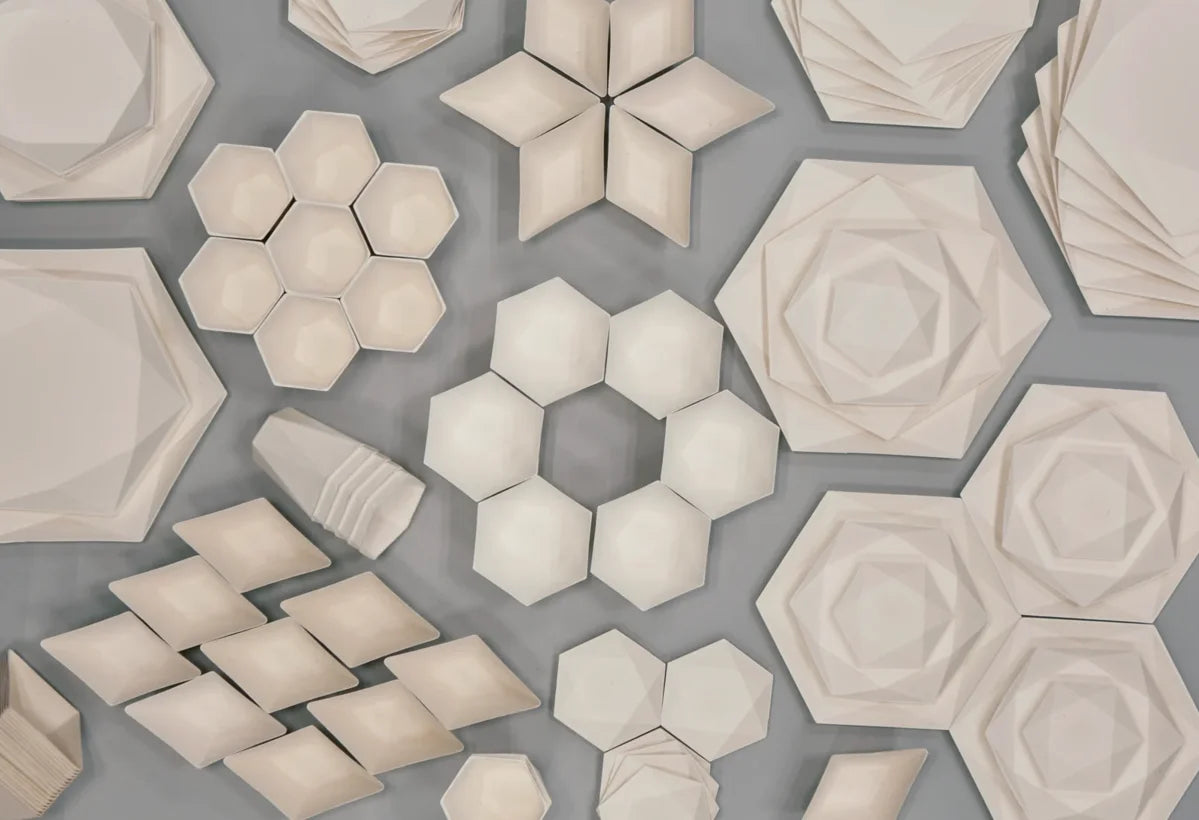
■ New Developments for “asanoha URUSHI”
At asanoha, we have been promoting initiatives from an environmental perspective, such as collecting used asanoha and recycling it as raw material for toilet paper. In this context, we received warm feedback from customers who had used our products saying, "Even if it is recycled, it is a waste to throw away asanoha that has been used once," which led to the creation of "asanoha URUSHI." By applying lacquer, it is reborn into a reusable vessel. Not only can you use it before applying lacquer, but you can also wash and dry the vessel after use and reapply the lacquer.
This launch of "asanoha URUSHI" was made possible through co-creation with Tsutsumi Asakichi Shichiten, a historic and long-established lacquer refining and wholesale manufacturer founded in Kyoto in 1909. Lacquer has been distanced from modern daily life due to impressions such as "it might cause a rash," "it is difficult to handle," and "it is expensive," but it is actually an excellent natural material provided by nature, and it is a material that supports a clean and comfortable daily life to the extent that it overcomes concerns about maintenance.
"asanoha URUSHI" is scheduled to go on sale on the asanoha online site from mid-December.
Click here for the asanoha® Official Online Store ↗

■ Lacquerware Experience at BEAMS “Calling Tokyo” and Advance Sale of “asanoha URUSHI”
At “Calling Tokyo,” held from Saturday, November 28, 2026, we will offer a lacquerware-making experience in collaboration with Tsutsumi Asakichi Shouten. Lacquerware and lacquer-painting kits will also be available for purchase at the venue.
【asanoha × Tsutsumi Asakichi Urushi Lacquer-Painting Experience】
“Lacquer” and “hemp” have long been cherished in Japan. We decided to participate in this event in the hope that the lacquer-painting experience would allow you to discover how enjoyable it is and serve as an opportunity to learn about the fine traditional crafts of Japan.
In collaboration with Tsutsumi Asakichi Urushi, which works to make lacquerware a more familiar part of everyday life, you can learn about preparing to apply lacquer, application techniques, drying and storage methods, and more while actually applying lacquer to asanoha.
・Dates and Times:
Saturday, November 28, 2026: 12:30–13:30 / 14:30–15:30 / 16:30–19:00
Sunday, November 29, 2026: 11:00–13:30 / 14:30–18:00
・Duration: Approximately 30 minutes to 1 hour
・Location: Held as part of the “Calling Tokyo” event at SPACE R in Daikanyama
・Participation Fee: Free (No advance registration required)
■BEAMS “Calling Tokyo” Event Overview
・Dates: Saturday, November 28 – Monday, December 7, 2026, 11:00 a.m. – 7:00 p.m. *Until 4:00 p.m. on the final day
・Venue: SPACE R Daikanyama (1-35-3 Nishi-Ebisu, Shibuya-ku, Tokyo / 2-minute walk from Daikanyama Station)
・Event URL: https://www.beams.co.jp/news/5089/
【What is Calling?】
Under the concept of “For All Genders / For All Generations / For All Backgrounds,” this project explores new possibilities in craftsmanship through the materials, cultures, and people encountered on journeys. Offering everyday wear that transcends generations and gender, allowing people to wear comfort true to themselves, Calling develops three brands: 〈Calling〉, which offers clothing for everyone regardless of generation or gender; 〈CATHRI〉, where the techniques of Kurume Kasuri, an Important Intangible Cultural Property, meet contemporary sensibilities; and 〈HIZEN jewelry〉, which reimagines Hizen ceramics as gemstones to propose new forms of jewelry. Through fashion, Calling carries “craftsmanship worth preserving for future generations” from across Japan and around the world into the future.
URL: https://www.beams.co.jp/calling/ Instagram: @calling_official_japan
■ What is "asanoha"?
asanoha are paper dishes that evoke Japan, born from a desire to share Japanese culture and tradition.
A portion of the raw materials used is "ogara" (hemp stalks), a byproduct left over after harvesting hemp fibers. We are also advancing initiatives such as collecting used asanoha and recycling it as raw material for toilet paper, as part of our environmentally friendly efforts to circulate renewable resources.